

What is HDPE, and why is it one of the most versatile plastics?
Are you struggling to choose the right material for your project? The wrong plastic can lead to failure and wasted money, but HDPE is often the reliable answer you need.
High-Density Polyethylene, or HDPE, is a durable, versatile, and cost-effective thermoplastic polymer. It is a go-to material for countless industries due to its impressive strength, chemical resistance, and ease of fabrication, making it suitable for everything from industrial pipes to household products.
In my 10 years in the engineering plastics industry, I’ve seen HDPE solve problems for customers time and time again. It’s a material I trust and recommend frequently. But to really understand its value, you need to know what it is, what makes it so tough, and where it truly shines. In this guide, I’ll walk you through everything, drawing on my daily experience with this incredible material. Let’s get started.
What actually is HDPE and how is it made?
Do technical terms like "thermoplastic" and "polymerization" seem confusing? This confusion can stop you from understanding why HDPE is so uniquely strong, but let’s break it down simply.
HDPE is a thermoplastic created from ethylene gas through a process called polymerization. Its molecular structure consists of long, straight chains packed tightly together, giving it a "high density" that results in its signature rigidity, strength, and durability. You can identify it by the #2 recycling symbol.

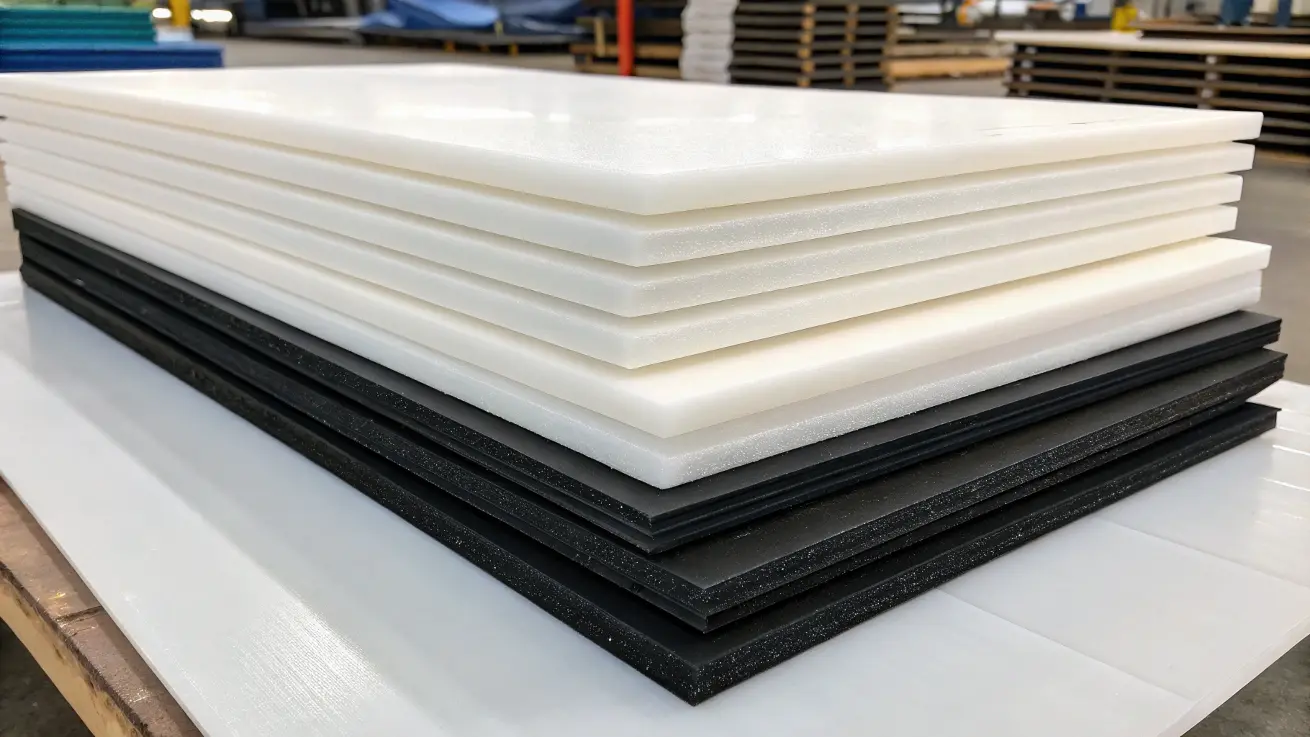
When we talk about plastics, we often categorize them as either thermoplastics or thermosets. Think of a thermoplastic like butter—you can melt it and reshape it multiple times. HDPE is a thermoplastic, which means we can heat it, mold it into sheets like the ones we stock in our factories, and then a customer can heat it again to form it into a final product. This re-formability is also key to its recyclability. The process starts with ethylene, a gas derived from natural gas or petroleum. Under specific pressure and temperature with a catalyst, these small ethylene molecules (monomers) link together into long, linear chains (polymers). Because these chains are so straight and orderly, they can pack very closely together. This close packing is what makes the material dense and strong. In our business, we see the direct result of this process in the tough, reliable sheets and finished parts we ship to clients worldwide.
What are the key properties and benefits of HDPE?
You know you need a material with specific qualities but aren’t sure if HDPE fits. Guessing which plastic to use can lead to project failure and costly mistakes.
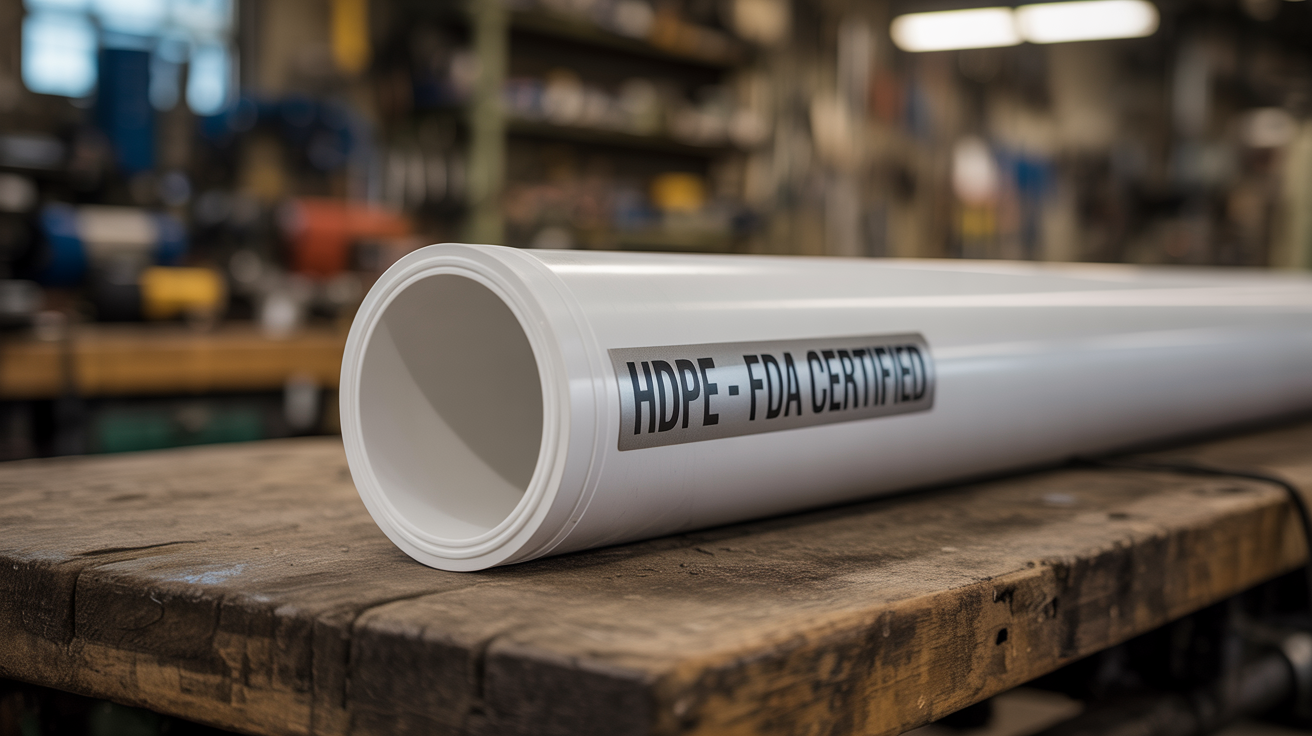
HDPE’s main benefits include its high strength-to-weight ratio, excellent chemical and impact resistance, and very low moisture absorption. It is also available in food-grade variants certified by the FDA, making it an incredibly versatile workhorse material for industrial and consumer applications alike.
Every day, my team and I consult with clients who need materials that can perform under pressure. HDPE is often the star of these conversations because its properties translate directly into real-world benefits. It’s not just strong on paper; it delivers results. Let’s look at the core properties I discuss most often.
High Strength-to-Density Ratio
This is a huge advantage. HDPE is very strong, but it’s also lightweight. This makes it easier and cheaper to transport and install, whether it’s a large-diameter pipe or a custom-machined part.
Superb Chemical Resistance
From harsh industrial acids to cleaning agents, HDPE holds up. This is why we sell so much of it for chemical tanks, industrial containers, and liners. It won’t corrode or degrade, ensuring safety and longevity.
Durability and Weather Resistance
HDPE is tough. It can take a hit without cracking, even in cold temperatures where other plastics become brittle. With UV stabilizers added, it performs exceptionally well outdoors, resisting weather and sun damage for years.
Excellent Moisture Barrier
HDPE absorbs very little water. This makes it a perfect barrier material, ideal for food packaging and geomembranes used in landfill liners to protect the environment.
| Property | Benefit | Common Application Example |
|---|---|---|
| Strength-to-Density Ratio | Strong yet lightweight | Ground protection mats, automotive parts |
| Chemical Resistance | Resists acids, bases, solvents | Chemical storage tanks, industrial piping |
| Impact & Weather Resistance | Durable even in low temps | Playground equipment, outdoor furniture |
| Moisture Resistance | Very low water absorption | Food containers, pipe liners |
| Food Grade Availability | Safe for direct food contact | Cutting boards, milk jugs |
What are the most common uses and applications for HDPE?
You understand the properties, but you can’t quite picture the applications in the real world. Without seeing it in action, the benefits can feel abstract and theoretical.
You find HDPE everywhere. It’s in your home as milk jugs and shampoo bottles, and it forms massive industrial pipes for water and gas. It’s also used for cutting boards, ground protection mats, playground equipment, and even boat components due to its sheer ruggedness.

From our factories in Dezhou, Cangzhou, and Suzhou, we ship HDPE for an incredible range of uses. It’s one of those materials that quietly supports our modern world. Here are the main categories where I see it being used most.
Industrial & Construction
This is a huge market for us. We export heavy-duty HDPE sheets that become chemical tanks, pipe systems for water and gas, and landfill liners (geomembranes). One of our key products, Ground Protection Mats, is made from HDPE. These mats allow heavy vehicles to cross soft ground without causing damage, a perfect example of its strength and durability.
Packaging
This is where most consumers interact with HDPE. It’s used for bottles for milk, juice, shampoo, and household cleaners. Its chemical resistance makes it perfect for holding detergents or motor oil. It provides a safe, strong, and lightweight container solution.
Consumer & Recreational Goods
HDPE is a favorite for products that need to be tough and safe. Think of children’s toys, playground slides, and outdoor furniture. We also manufacture and export Football Rebounders (rebound boards) from HDPE. They have to withstand thousands of high-impact ball strikes in all weather, and HDPE is the perfect material for the job.
How does HDPE compare to other plastics like LDPE?
HDPE sounds great, but is it actually better than other options like LDPE? Choosing the wrong one can compromise your project’s performance and lead to early failure.
Compared to LDPE (Low-Density Polyethylene), HDPE is significantly more rigid, harder, and has superior chemical and heat resistance. LDPE is softer and more flexible, making it ideal for plastic films and squeeze bottles, while HDPE excels in structural and high-durability applications.
 .
.
I often get questions from clients asking whether they need HDPE or LDPE. They are chemically similar but have very different performance profiles due to their molecular structure. While HDPE has tight, linear chains, LDPE has branched chains that can’t pack as closely. This small difference has a huge impact.
| Feature | High-Density Polyethylene (HDPE) | Low-Density Polyethylene (LDPE) |
|---|---|---|
| Density | Higher (0.941-0.965 g/cm³) | Lower (0.910-0.940 g/cm³) |
| Structure | Rigid, Stiff, Strong | Soft, Flexible |
| Clarity | Translucent to Opaque | Translucent to Clear |
| Chemical Resistance1 | Excellent | Good |
| Common Uses | Pipes, Tanks, Cutting Boards | Plastic Bags, Squeeze Bottles, Film |
Of course, no material is perfect. It’s important to be honest about HDPE’s limitations.
- Pros: It’s cost-effective, highly durable, resistant to many chemicals, and easily recyclable (#2).
- Cons: Standard HDPE has poor UV resistance2, though this is easily fixed by adding UV stabilizers. It can also be difficult to glue with common adhesives and has a higher rate of thermal expansion than some other materials.
Regarding health and environmental concerns, it’s a valid question. High-quality HDPE, produced to international standards, is non-toxic and safe for food contact3. It doesn’t leach harmful chemicals. And because it’s so widely recycled, it can be part of a sustainable material lifecycle4, being turned into new products again and again.
Conclusion
In short, HDPE is a remarkably strong, safe, and versatile plastic. Its unique properties make it a reliable and cost-effective solution for countless industrial, commercial, and consumer needs.
-
Understanding the chemical resistance of these materials can help in selecting the right one for specific applications. ↩
-
Exploring methods to enhance UV resistance in HDPE can lead to better material performance and longevity. ↩
-
Learn more about the safety of HDPE in food applications and its non-toxic properties. ↩
-
Discover how HDPE recycling supports sustainability and reduces environmental impact. ↩
About the Author
