


What Are Plastic Honeycomb Sheets? An In-Depth Expert Guide
Are you searching for a strong but lightweight material for your project? Heavy materials drive up shipping costs, and flimsy ones just don’t last. Plastic honeycomb sheets offer the perfect solution.
Plastic honeycomb sheets are lightweight structural panels made with a core of hexagonal cells, like a bee’s honeycomb, bonded between two thin face sheets. Typically made from polypropylene (PP), they offer excellent rigidity, impact resistance, and a superior strength-to-weight ratio for various industrial applications.

I’ve seen these panels solve countless problems for my clients over the past decade. Their unique structure is the key to their performance, offering a modern alternative to materials like plywood or solid plastic sheets. But how exactly does this nature-inspired design work, and how are these impressive sheets made? Let’s explore the details behind this versatile material and see how it can benefit your business.
What is the Science Behind Their Strength and Composition?
Ever wonder how such a light panel can be so incredibly strong? It seems counterintuitive. The genius lies in its honeycomb core and the durable polypropylene it’s made from.
The strength comes from the hexagonal honeycomb core. This structure efficiently distributes forces across the entire panel, preventing localized failure. Combined with durable face sheets, typically made from polypropylene (PP), the result is a composite panel with exceptional rigidity and impact resistance despite its low weight.
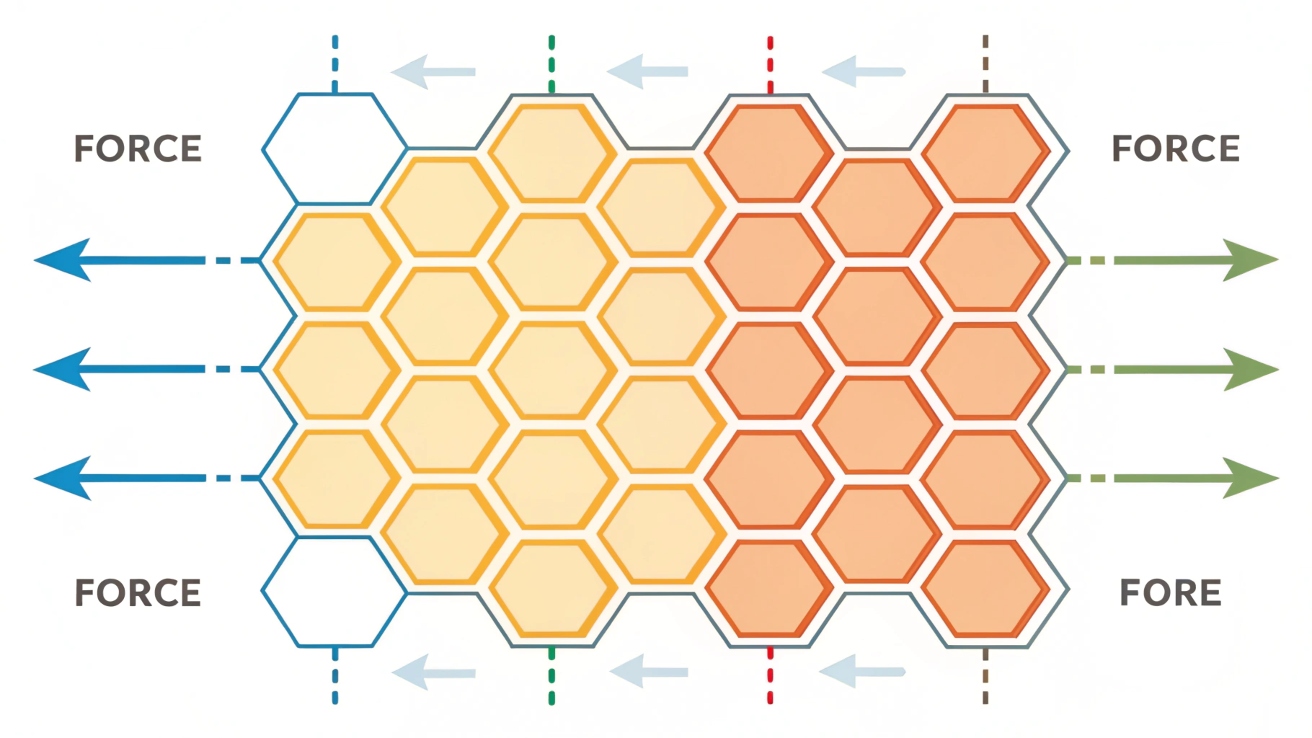
The real magic of these sheets is their bio-inspired design. A honeycomb is one of nature’s strongest shapes. Let’s break down why.
The Core’s Geometry
The hexagonal cells are the heart of the panel. When a force hits the sheet, it doesn’t just impact one spot. Instead, the force is distributed through the interconnected walls of the hexagons to a much larger area. This distribution prevents bending and adds immense stiffness. I’ve personally seen these panels withstand impacts that would easily dent metal sheets that were twice the weight. This principle makes them ideal for protective applications.
Material Matters
The choice of material is just as important. We primarily use Polypropylene (PP) for these sheets. Here’s why it’s such a great fit:
| Property | Benefit |
|---|---|
| Low Density | Creates a very lightweight final product, reducing shipping costs. |
| High Rigidity | Resists bending and flexing under heavy loads. |
| Chemical Resistance | Withstands oils, solvents, and moisture without degrading. |
| Recyclability | An environmentally friendly option that can be reprocessed. |
The core is then sandwiched between two solid PP face sheets during manufacturing. These skins provide a smooth, durable surface and seal the core, creating a unified, strong composite panel ready for the most demanding jobs.
How Are Plastic Honeycomb Sheets Manufactured?
Curious about how these intricate honeycomb panels are created from simple plastic pellets? The manufacturing process might seem complex. Let me walk you through the precise steps we use daily in our factories.
The process starts with melting polypropylene (PP) pellets. This molten plastic is then extruded through a specialized die that forms the honeycomb core and face sheets simultaneously. The layers are thermally fused together as they cool, creating a single, integrated panel without any adhesives or glues.
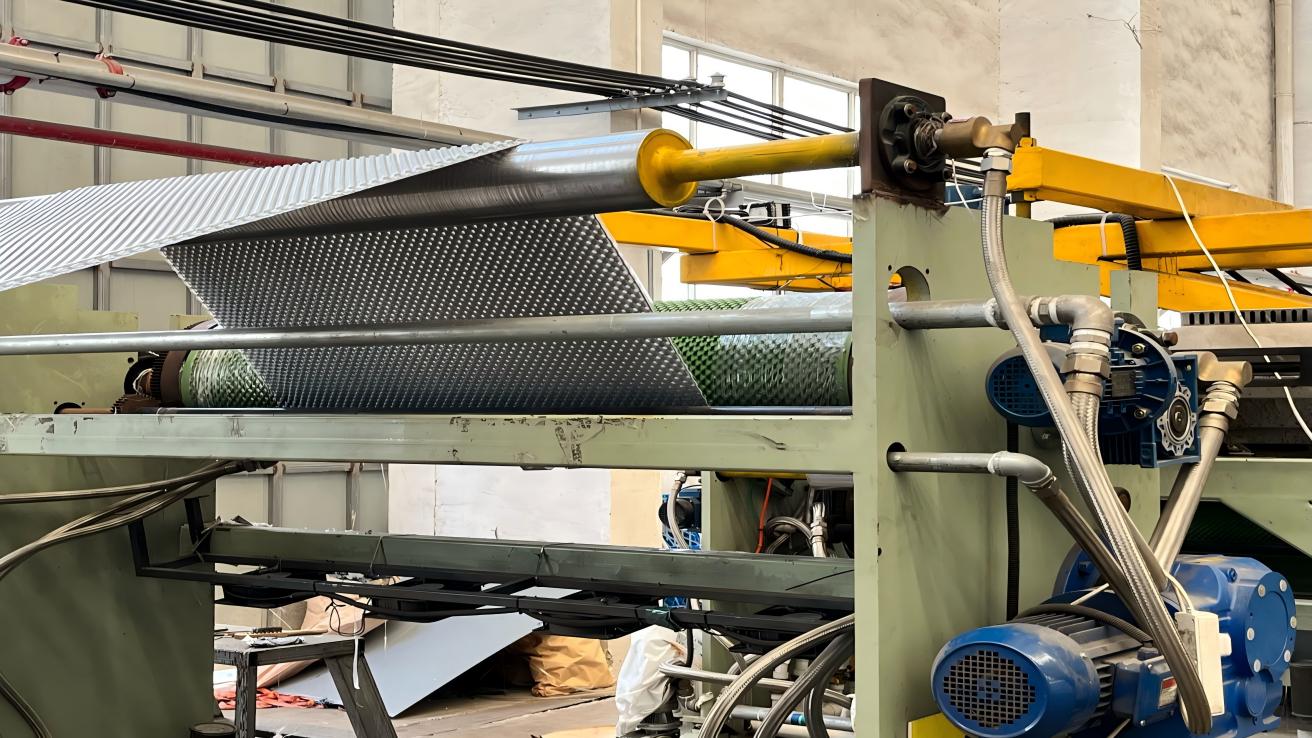
Having overseen production in our three branch factories, I can tell you the process is a blend of technology and precision. It’s not as simple as just melting and forming plastic; it requires careful control at every stage.
Step 1: Material Preparation
Everything starts with high-quality polypropylene (PP) pellets. Based on the client’s order, we might mix in additives for UV resistance or specific colors. These pellets are then dried to remove any moisture, which is a critical step for a flawless, void-free final product.
Step 2: Co-Extrusion
This is the key step. The prepared pellets are fed into an extruder, which melts them into a consistent, liquid state. This molten plastic is then forced through a complex die. This special tool is engineered to form three layers at once: the top face sheet, the hexagonal honeycomb core, and the bottom face sheet.
Step 3: Fusing, Cooling, and Cutting
As the layers exit the die, they are still hot and pliable. They are immediately passed through rollers that press them together, thermally fusing them into a single, seamless panel. No glue is needed; the heat bonds the layers permanently. The panel then continues along a cooling line to solidify and set its shape. Our quality control team constantly monitors thickness and cell structure to ensure every sheet meets our high standards. Finally, the continuous sheet is cut to standard sizes, like 4×8 feet, or to custom dimensions for specific projects.
What Are the Key Advantages and Common Applications?
Are you looking for a single material that is strong, light, and waterproof? Juggling different materials to meet various needs can be a real headache. Honeycomb sheets excel in multiple areas, making them incredibly versatile.
Key advantages include a high strength-to-weight ratio, durability, water and chemical resistance, and recyclability. These benefits make them ideal for industries like automotive for pallet sleeve boxes, logistics for dunnage, construction as protective layering, and even furniture manufacturing as a lightweight core material.
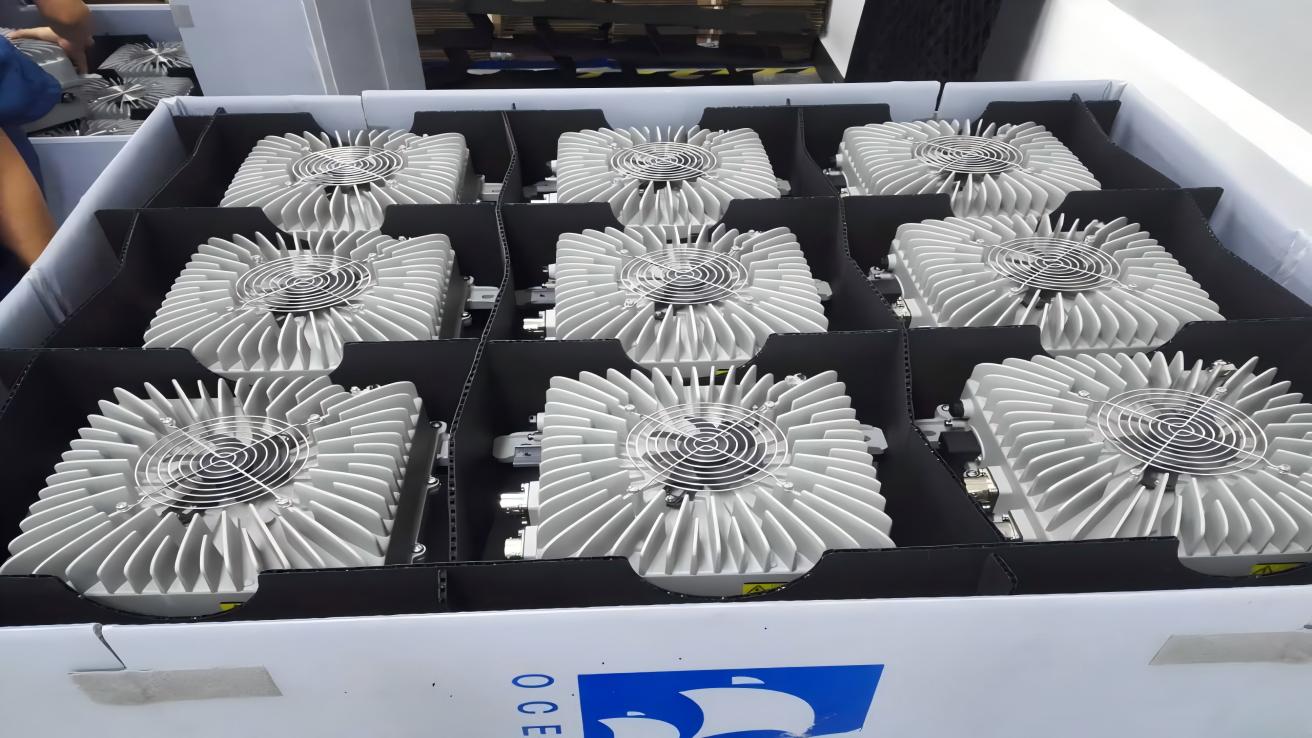
Over my 10 years in this business, the list of applications for plastic honeycomb sheets has just kept growing. Their core benefits solve so many common industrial challenges. The main advantage is simple: you get the strength you need without the weight penalty of solid plastic, wood, or metal. This directly translates to lower fuel costs in transport and easier handling for workers. These sheets are also completely waterproof and resist chemicals, so they don’t rot, mold, or corrode.
One of our biggest markets is the logistics and automotive industry. We use these sheets to create pallet sleeve boxes for transporting parts. They are strong enough to hold heavy components but light enough to be folded down and returned efficiently, saving companies huge amounts in shipping costs.
| Industry | Application | Why It Works |
|---|---|---|
| Automotive & Logistics | Pallet Sleeve Boxes, Dunnage | Lightweight for return logistics, durable for constant reuse. |
| Construction | Floor/Wall Protection, Temp Doors | Replaces plywood; waterproof, reusable, and impact-resistant. |
| Signage & Display | Sign Backers, Exhibit Booths | Rigid, flat, and light, making it perfect for large graphics. |
| Marine | Boat Decks, Partitions, Hatches | Will not rot, mold, or delaminate when exposed to water. |
We’ve even seen them used to protect elevator walls and floors during new construction, a job once reserved for heavy, single-use plywood.
How Can Honeycomb Sheets Be Customized and Machined?
Do you need a specific shape or size that a standard sheet can’t provide? Trying to cut complex parts yourself can be difficult and lead to wasted material. We solve this with full customization and machining options.
Honeycomb sheets are highly customizable. We can adjust thickness, color, and sheet dimensions during production. For precise parts, we use CNC (Computer Numerical Control) machining to cut, drill, and shape the sheets to exact specifications based on a design, ensuring perfect-fit components.
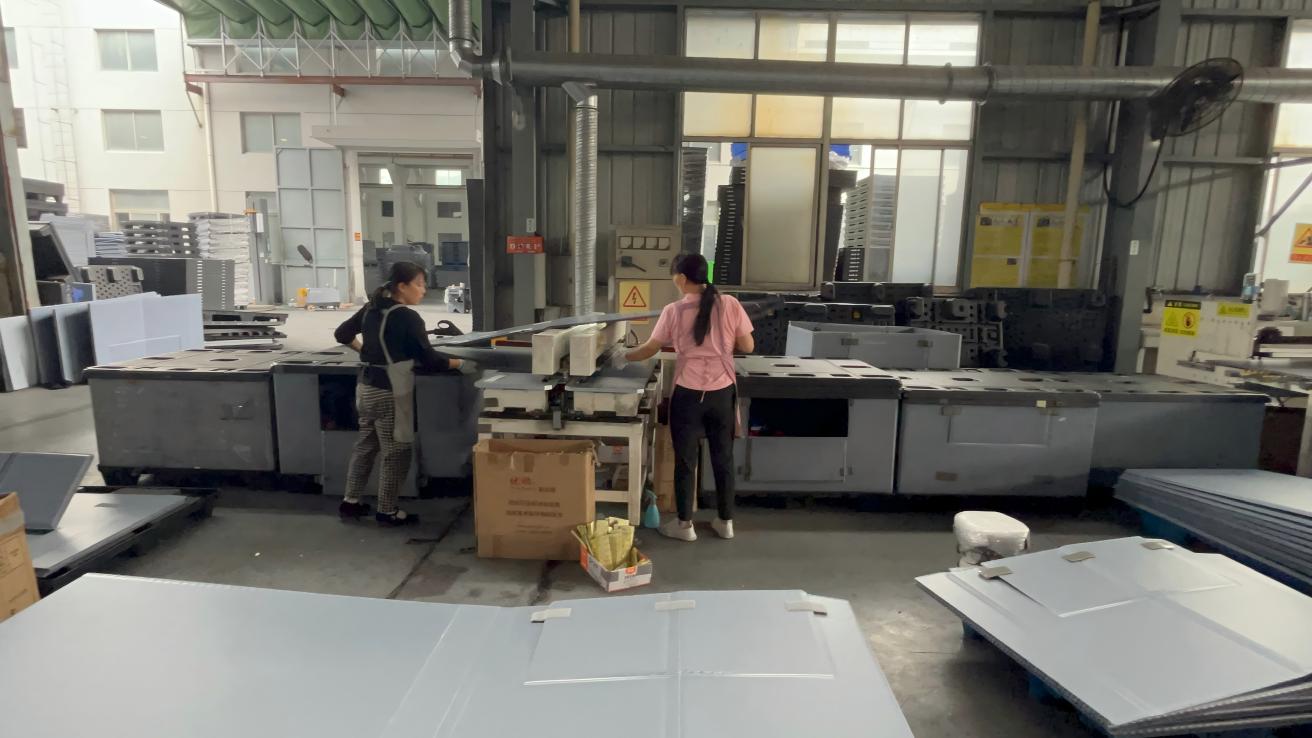
A standard 4×8 sheet is just the beginning. One of our core business services is turning these semi-finished panels into finished products tailored to a client’s exact needs. This is where our engineering team and our 10 CNC machine tools really shine.
Customization Options
Before we even cut a sheet, we can customize the panel itself. We can produce sheets in various thicknesses, typically from 3mm up to 12mm, to find the perfect balance between weight and rigidity for your application. We can also embed specific colors directly into the plastic to match a corporate brand or add UV inhibitors1 for long-term outdoor use.
Precision with CNC Machining
For complex shapes and finished parts, we rely on our CNC routers2. A client simply sends us a digital drawing3 (like a CAD file), or our team can help create one. The file is loaded into the computer, which then controls the machine to perform the work. It can cut intricate outlines, drill precise holes, and create smooth, rounded edges with incredible accuracy and repeatability, batch after batch. I remember a client who needed thousands of internal dividers for their pallet sleeve box(returnable containers)4. Each one needed specific notches and holes to fit perfectly. Doing that by hand would have been impossible. Our CNC machine produced identical parts, day after day, with no errors. This service transforms a simple sheet material into a ready-to-use engineered component.
Conclusion
Plastic honeycomb sheets are a strong, lightweight, and versatile solution. From logistics to construction, their unique structure and customizability offer a superior alternative to traditional materials for modern industry.
-
Exploring the role of UV inhibitors can provide insights into extending the lifespan of outdoor materials. ↩
-
Explore this link to understand how CNC routers enhance precision and efficiency in manufacturing processes. ↩
-
This resource will guide you on creating effective digital drawings, crucial for successful CNC machining. ↩
-
Explore this link to understand how pallet sleeve boxes enhance efficiency and sustainability in logistics. ↩
About the Author
